
AlistoIRAlistoIR
Incident Response Case Management

Run incident response from a system built for cases, not scattered notes.

AlistoIR helps security teams move from raw alerts to accountable incident handling with structured cases, evidence, comments, task flow, and analyst collaboration.

  • Track ownership, status, and timelines in one place.
  • Keep evidence, notes, observables, and alerts attached to the same case.
  • Support cleaner handoffs across analysts, shifts, and escalation paths.
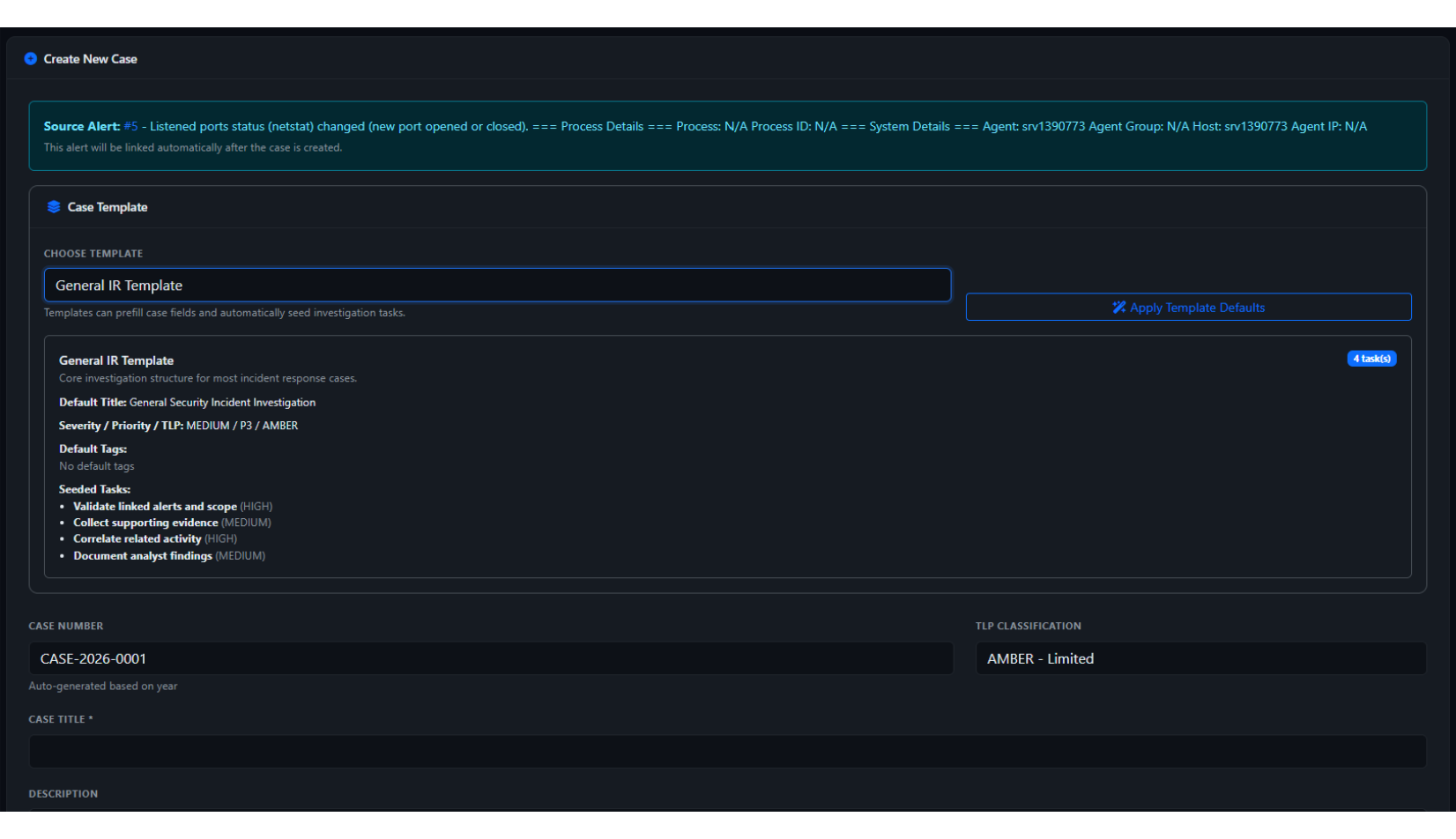
Incident response case management workflow illustration
Your team already handles incidents but lacks a dedicated security case workflow
You need better handoffs across analysts, managers, or client stakeholders
You want investigation quality and documentation quality to improve together

Where AlistoIR fits in incident response

AlistoIR is designed for teams that already detect meaningful security events but need a cleaner way to manage case ownership, investigation progress, evidence, and final documentation.

  • Incidents are tracked in chat threads, spreadsheets, and temporary analyst notes.
  • It is hard to answer who owns the case, what was done, and what evidence supports the conclusion.
  • Escalations and reporting slow down because the case story has to be rebuilt manually every time.

What case management looks like in AlistoIR

AlistoIR turns alert-driven work into a proper case workflow so the team can manage investigation progress, collaboration, and evidence without losing continuity.

  • Link related alerts, artifacts, comments, and tasks to a single response object.
  • Maintain a clear audit trail for analyst activity and response progression.
  • Support final reporting and review without reconstructing the incident from multiple tools.

What this workflow looks like in AlistoIR

Each capability below exists to help security teams move from alert context to accountable response without stitching together disconnected tools.

Case-centric investigations

Work from a single incident record that holds the context needed for triage, escalation, response, and closure.

Evidence and artifact handling

Keep observables, notes, and supporting material attached to the case so nothing important gets lost during handoff.

Operational traceability

Create a cleaner record of what the team saw, what actions were taken, and how the incident was resolved.

AlistoIR is a strong fit when

Teams usually get the most value when the workflow and operating model below already match how they handle incidents today.

  • Your team already handles incidents but lacks a dedicated security case workflow
  • You need better handoffs across analysts, managers, or client stakeholders
  • You want investigation quality and documentation quality to improve together

Frequently asked questions

Common questions about how AlistoIR supports this workflow.

Is this just a ticketing tool?

No. The workflow is meant for security response, so it focuses on alerts, observables, evidence, investigation steps, and operational context rather than generic IT ticket handling.

Can this support post-incident reporting?

Yes. Structured case data makes it easier to create clean summaries, reviews, and stakeholder-ready incident documentation.

Why does case management matter for SOC teams?

Because detections without disciplined case handling often lead to inconsistent investigations, unclear ownership, and weak incident memory.

Who benefits most from this page?

Security leads, IR managers, SOC teams, and MSSPs evaluating how to formalize incident handling without adopting a heavyweight enterprise platform first.

Want to see how this fits your security workflow?

Tell us about your Wazuh deployment, response process, or client operations model and we can show you where AlistoIR fits without requiring a full rip-and-replace of your existing stack.