AlistoIRAlistoIR
AI-Assisted SOC Triage

Help analysts understand alerts faster without removing human judgment.

AlistoIR uses AI to support SOC triage with summarization, context shaping, and investigation guidance so analysts can move faster through noisy queues without handing over final response decisions.

  • Shorten the time it takes to understand what an alert is really about.
  • Give analysts a better starting point for investigation and escalation.
  • Keep final decisions, approvals, and response actions with the human team.
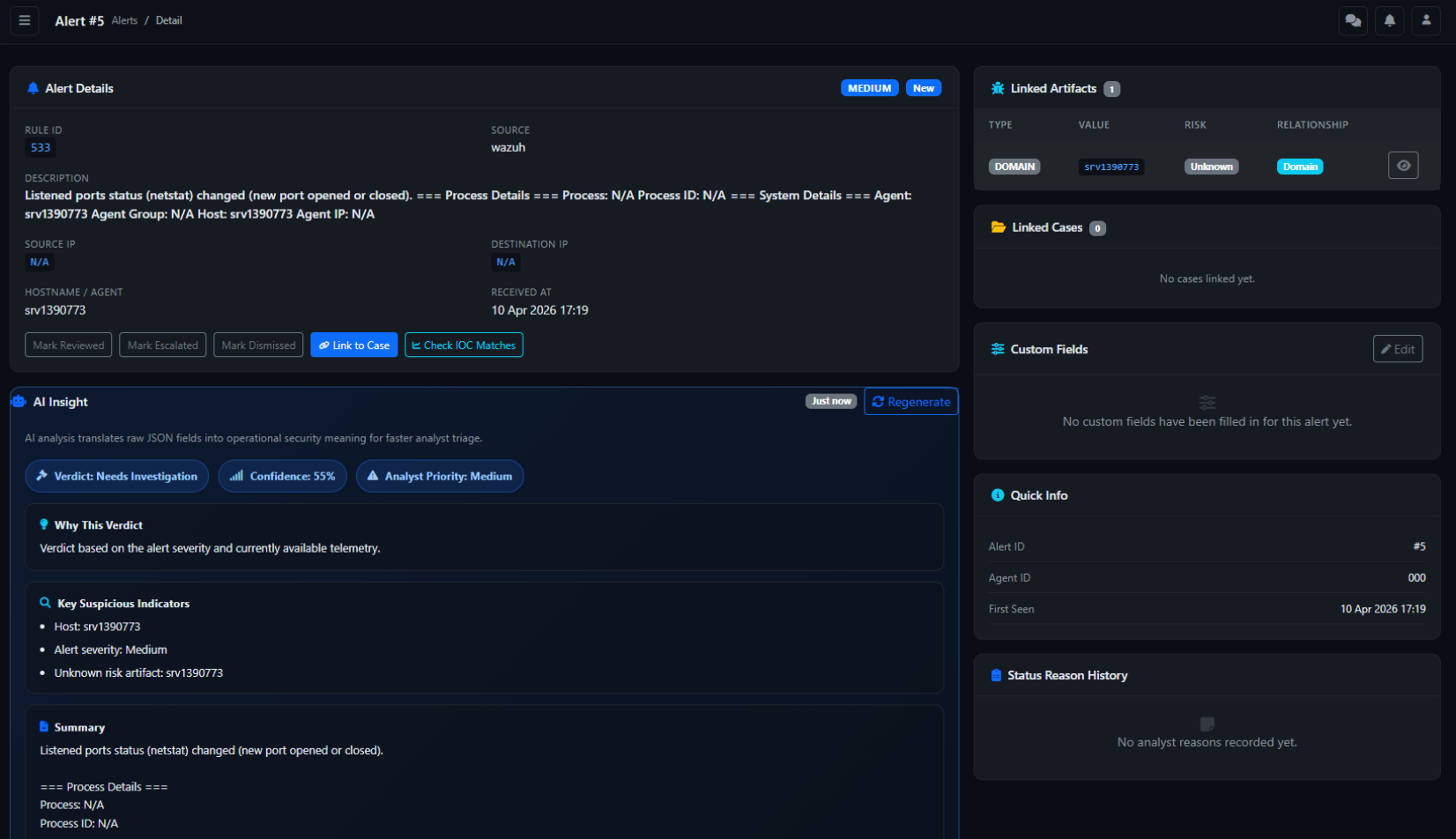
AI-assisted SOC triage workflow illustration
Your SOC handles high alert volume and repetitive triage work
You want AI assistance without autonomous response decisions
You need faster analyst review while preserving accountability

Where AlistoIR fits in triage-heavy SOC work

This workflow is useful for teams dealing with repetitive alert review, inconsistent triage quality, or long queues that slow down investigation and escalation.

  • Analysts spend too much time reading raw alert details before deciding whether something matters.
  • Triage quality changes depending on who is on shift or how overloaded the queue is.
  • Security leads want speed gains from AI without losing control over high-risk decisions.

How AlistoIR supports AI-assisted triage

AlistoIR uses AI as an analyst support layer, not a replacement. The goal is to help the team reach a clearer starting point faster, with enough context to decide what should happen next.

  • Summarize alert context into more readable analyst-friendly outputs.
  • Highlight suspicious indicators, related evidence, and useful investigation angles.
  • Keep AI output embedded inside a broader SOC workflow with case handling and analyst review.

What this workflow looks like in AlistoIR

Each capability below exists to help security teams move from alert context to accountable response without stitching together disconnected tools.

Readable first-pass summaries

Turn dense alert data into faster first-pass triage context so analysts can see what deserves attention sooner.

Analyst-guided next steps

Use AI to support investigation direction while keeping escalation, case decisions, and actions in analyst hands.

Workflow-aware triage support

Keep AI triage connected to cases, artifacts, and broader response workflow instead of isolating it as a standalone chatbot feature.

AlistoIR is a strong fit when

Teams usually get the most value when the workflow and operating model below already match how they handle incidents today.

  • Your SOC handles high alert volume and repetitive triage work
  • You want AI assistance without autonomous response decisions
  • You need faster analyst review while preserving accountability

Frequently asked questions

Common questions about how AlistoIR supports this workflow.

Does AlistoIR make decisions automatically?

No. The intent is to support analyst speed and clarity, not to replace human judgment for important triage and response decisions.

Who benefits most from this workflow?

SOC teams with noisy queues, limited analyst time, or a need for more consistent first-pass triage across shifts.

How is this different from generic AI summaries?

In AlistoIR, the AI output is tied to actual security workflow such as alert review, case handling, observables, and investigation context.

Can this help junior analysts too?

Yes. It can give less experienced analysts a stronger starting point while still letting senior reviewers control final direction and escalation.

Want to see how this fits your security workflow?

Tell us about your Wazuh deployment, response process, or client operations model and we can show you where AlistoIR fits without requiring a full rip-and-replace of your existing stack.